
The Everest Paradox: A Narrative of History, Mortality, Financial Strain, and Environmental Impact
It has been 70 years since the human being foot stepped on top of the world. The Everest Expedition is one of the deadly adventure. A name, fame, and reputation comes after successful expedition is incomparable with any other adventure activities. Thousands of records have been created and many more to come. The world’s highest peak have huge goodwill which attract hundreds of people to climb it yearly.
History
The history of Everest expeditions is intertwined with human perseverance, ambition, and the pursuit of conquering one of the world's greatest challenges. In 1953, Sir Edmund Hillary of New Zealand and Tenzing Norgay, a Sherpa of Nepal, achieved the first successful ascent of Mount Everest.
Their journey began on May 29th, when they left from Base Camp and established various camps along the South Col route. On May 29th, they reached the South Summit, but faced a challenging traverse known as the Hillary Step. With determination and skill, they surmounted the Step and continued towards the summit.
Finally, on May 29th, 1953, Hillary and Norgay stood triumphantly on the summit of Mount Everest, at an elevation of 8,848 meters (29,029 feet). Their achievement marked a significant milestone in mountaineering history and captivated the world's attention. Since then, countless expeditions have sought to reach the summit of Everest. Over the years, various routes have been established, including the North Ridge from Tibet and the West Ridge from Nepal. Technological advancements, improved equipment, and increased knowledge of the mountain have allowed for safer and more frequent attempts.
However, Everest remains a formidable challenge, claiming the lives of many brave climbers who dared to test their limits. Despite the risks, climbers from around the globe continue to be drawn to Everest, seeking to experience the thrill and accomplishment of standing atop the world's highest peak. The history of Everest expeditions serves as a testament to human determination, pushing the boundaries of what is possible and inspiring generations to reach for new heights.
Risk and Mortality rate in Everest
According to data collected from record-keeping website The Himalayan Database and other accounts, the annual average number of deaths on Mount Everest from 1922 through 2022 is approximately five climbers. The 30-year average from 1993 through 2022 is 6.2 deaths. 2023 has the highest mortality rate in Everest Expedition without any natural disaster. Late snowing on mountains makes this year colder than average which also play significance role on mortality rate. The death of porter and other supporting staff may not be on above record.
What increasing mortality rate despite so much development on technology and gears?
The increasing mortality rate persists despite advancements in technology and gear, due to misconceptions that Sherpas will handle everything after payment. Challenging weather conditions, climate change impacts, altitude sickness, exhaustion, and lack of experience also contribute. To address this, education, responsible tourism, safety protocols, and sustainable practices are essential. Collaboration among climbers, authorities, and local communities is crucial to mitigate risks and ensure safer mountain expeditions.
Financial Strain
Submitting Everest, or attempting to climb Mount Everest, is an expensive endeavor. The financial strain involved in such an undertaking can be significant. Here are some key factors that contribute to the financial burden of summiting Everest:
Expedition Cost
Joining a guided expedition is the most common way to attempt Everest. The cost varies depending on the operator, but it typically ranges from $30,000 to $100,000. This fee covers services like experienced guides, Sherpa support, base camp facilities, food, accommodation, and equipment.
Climbing Permit
The Nepalese government charges a hefty fee for climbing permits, particularly for Everest. The cost can exceed $11,000 per person for foreign climbers. Additionally, there may be additional fees for peak-specific permits, garbage deposits, and liaison officers.
Equipment and Gear
Mountaineering equipment is essential for Everest expeditions and can be quite expensive. Climbers need specialized gear such as mountaineering boots, ice axes, crampons, harnesses, down suits, and high-altitude tents. Purchasing or renting this equipment can cost several thousand dollars.
Training and Preparation
Climbers need to undergo extensive training and preparation to attempt Everest. This includes physical conditioning, technical climbing skills, and high-altitude experience. Training programs, guided climbs on other mountains, and pre-expedition medical checks can add to the overall expenses.
Travel and Accommodation
Getting to Nepal and the Everest region involves international airfare, local transportation, and accommodation in Kathmandu before and after the expedition. These costs can vary depending on the traveler's location and preferences.
Insurance
Climbing Everest requires specialized insurance coverage due to the high-risk nature of the expedition. Adequate coverage for medical emergencies, evacuation, and trip cancellation is essential but can be quite expensive.
Miscellaneous Expenses
Other costs to consider include visa fees, travel permits, communication expenses (satellite phones or internet access), oxygen cylinders, climbing Sherpa fees, and tips for guides and support staff.
Environmental Impact
The Everest expedition has significant environmental impacts, including pollution from discarded gear and waste, deforestation for trekking routes, erosion caused by excessive foot traffic, and melting glaciers due to climate change. Conservation efforts and responsible tourism practices are crucial to mitigate these impacts.
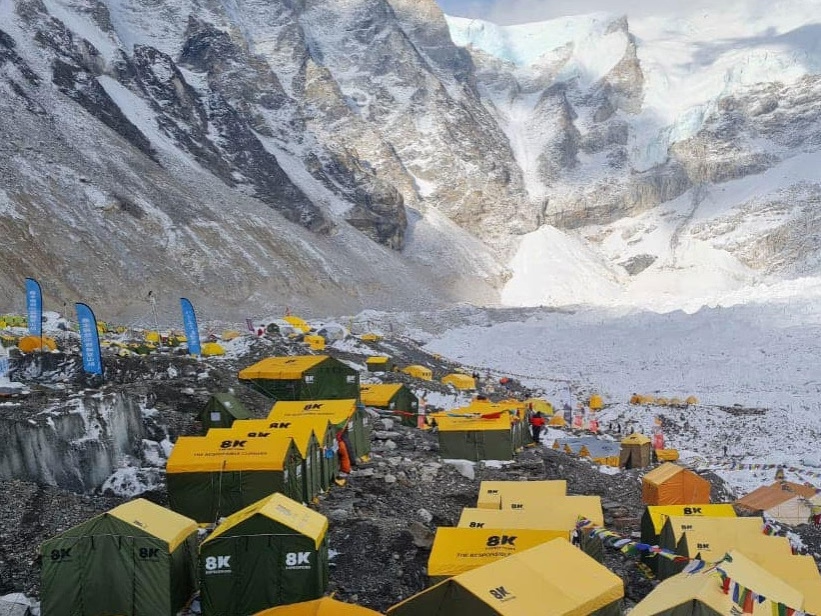
Everest Base Camp experiences annual changes due to the increasing number of visitors, including the effects of people urinating, walking, and breathing. The concentration of expedition groups at the camp leads to an accumulation of human waste, soil erosion from frequent foot traffic, and potential air pollution from the collective breathing people who made the camp for 2 months during the Everest Expedition. That’s the reason the government is planning to shift the Base Camp from glacier. So, in recent future people who do Everest Base Camp Trekking could be also won’t get opportunity to visit real Everest Base Camp.
Crazy records on Everest
Most number of time to submit
Kami Rita Sherpa is the highest number of successful Everest submitter with 28 times. He broke his own record of 27 times on 23rd May 2023.
Youngest Person to Climb
Jordan Romero from the United States of America is the youngest person to climb Mt. Everest at the age of 13 years 10 months and 10 days. Malavath Purna from India is the youngest female and second-youngest person to climb Everest at age of 13 years 11 months and 15 days.
Besides that, disabled people have also submitted the world's highest peak. People who are blind, amputated foot, double arm amputated, with no fingers and many more have conquered the Everest.
Travel writer at Shiva Excursion
Related Stories
Continue reading more travel guides and tips